By Stephanie Sirois, Managing Director, and Wendy Beer, Director, Channel Diligence
Operational Due Diligence is the independent evaluation of an investment manager’s non‑investment infrastructure – the people, processes, and controls that underpin how capital is managed and safeguarded. While investment due diligence focuses on investment performance, ODD focuses on operational integrity, governance culture, technology, and risk‑management effectiveness behind performance numbers.
ODD is a critical, yet often underappreciated, aspect of investing. By assessing operational robustness, investors can protect capital, enhance fiduciary oversight, and build more resilient portfolios. The following outlines why a disciplined ODD approach matters and how it delivers both risk mitigation and long-term value.
Protecting Capital: Operational weaknesses can cause large investor losses. ODD assesses whether risk mitigation and monitoring mechanisms are proportionate and fit for purpose given the strategy and size of investment before they can become costly failures.
Enhancing Fiduciary Duty: Institutional investors and allocators must assess operational soundness as part of their fiduciary responsibility. Robust ODD supports compliance with regulatory expectations.
Strengthening Portfolio Resilience: ODD helps build more resilient portfolios through lowering operational risk, quicker issue escalation and response, and greater clarity around valuation and liquidity.
Assist Investment Manager Selection and Monitoring: ODD helps distinguish investment managers with strong controls from those deemed higher risk operationally which may be used to establish side‑letter protections and monitoring cadence.
Building Trust and Credibility: A disciplined ODD process demonstrates integrity and strengthens both investor confidence and organizational credibility.
Operational Alpha: The incremental value created when an investment manager operates with institutional-grade governance, controls, and infrastructure. Strong operational discipline reduces non-investment risk and enhances a firm’s ability to scale and respond to market events. For allocators, this results in more resilient portfolios, smoother execution, and increased confidence in the durability of returns.
At Channel Diligence, we view operational due diligence as a strategic lever, not just a risk filter. Our approach integrates institutional expertise, independent integrity, and collaborative engagement with investment managers positioning them for long-term success. Our goal is to align each engagement with the client’s objectives, whether it’s helping allocators deploy capital with confidence, preparing investment managers for institutional capital, or advising boards on governance frameworks.
Key areas of ODD Review
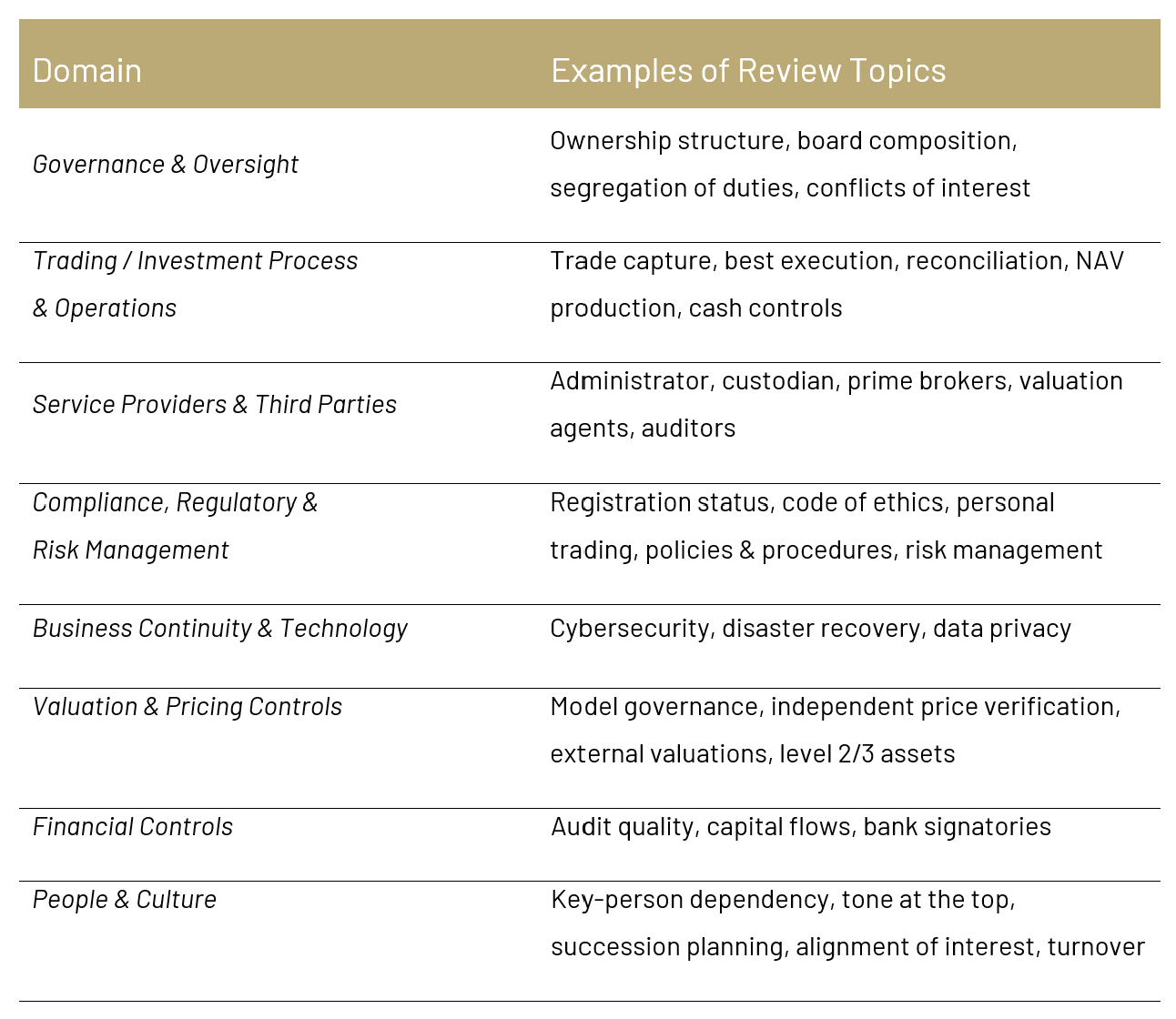
While investment performance is often the key focus, operational shortcomings are frequently the root cause of fund failures, regulatory actions, and investor losses. The table below highlights the key areas that are commonly scrutinized during an ODD review. These domains, from governance and oversight to technology and culture, offer critical insight into the types of risks that, if left unchecked, can have serious consequences for funds and their investors.
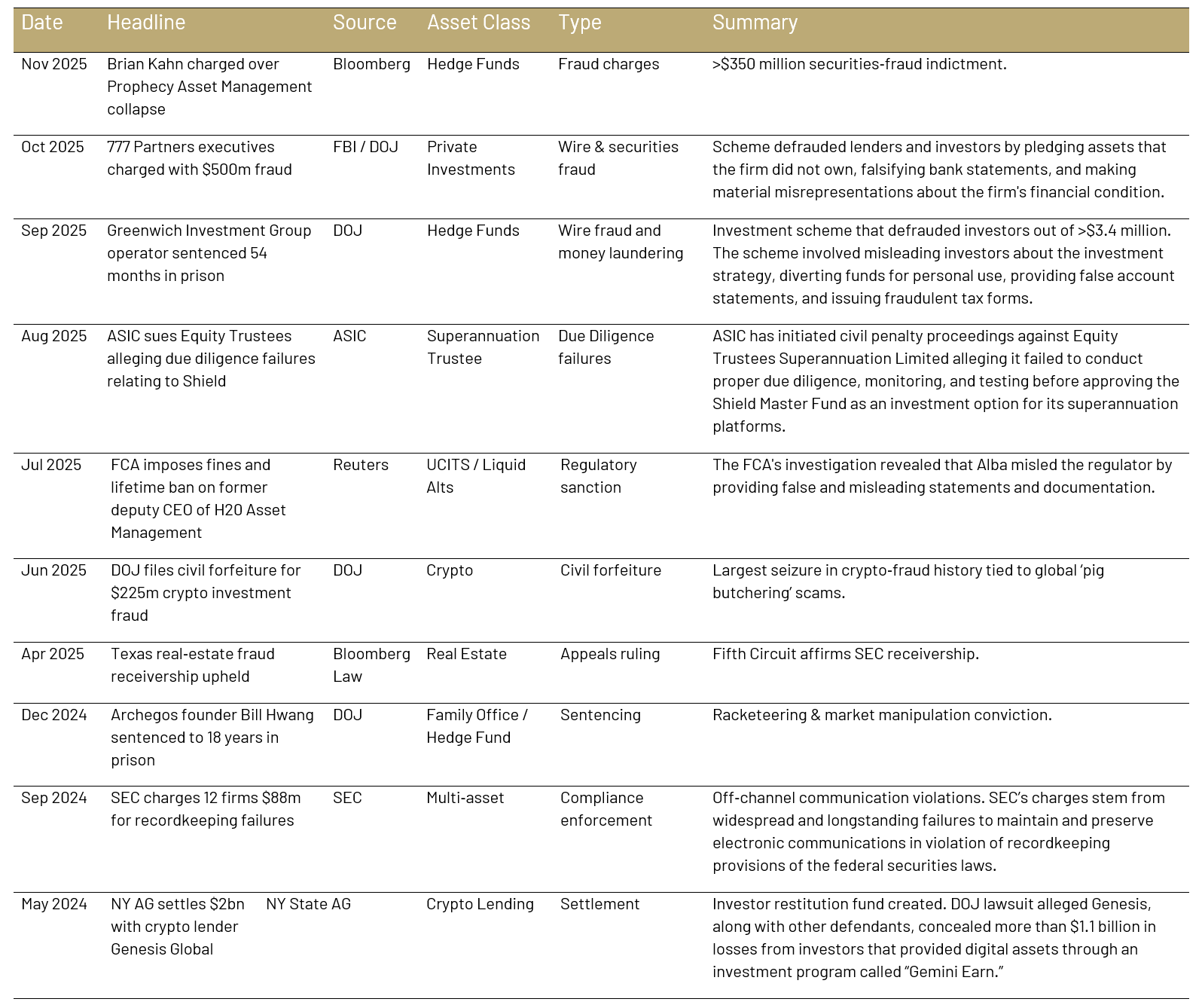
Recent high‑profile events in the alternatives industry demonstrate the importance of operational oversight and continuous monitoring.
Get our latest updates and investment manager performance reports